Excellent Elasticity
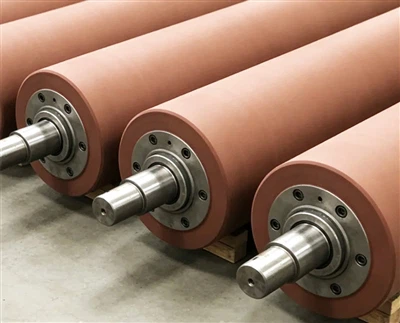
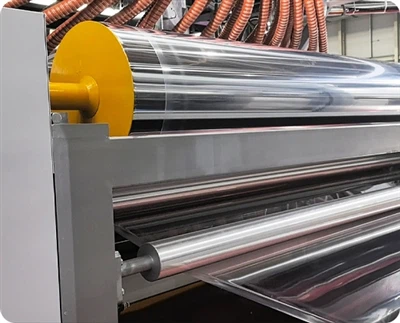
The rubber layer of coated rollers possesses high elasticity, allowing it to deform under external force and quickly return to its original shape after the force is removed. This elasticity enables the coated roller to evenly distribute pressure when in contact with objects, reducing damage. For example, in printing, an elastic coated roller can better conform to the printing plate, ensuring uniform ink transfer; in papermaking, an elastic press roller can better squeeze out moisture from the paper while preventing it from being crushed.
Abrasion Resistance
The rubber layer of coated rollers typically exhibits excellent abrasion resistance, maintaining a smooth and intact surface during prolonged use. This is because rubber materials themselves have high hardness and wear resistance, which can be further improved by selecting different rubber formulations and processing techniques. In industries such as printing and papermaking, coated rollers constantly come into contact with and rub against other objects; good abrasion resistance extends the service life of the coated rollers and reduces production costs.
Corrosion Resistance
The rubber layer of coated rollers resists the erosion of various chemicals, exhibiting excellent corrosion resistance. In certain specialized working environments, such as those in the chemical and food processing industries, rubber-coated rollers need to come into contact with various chemicals and acid/alkali solutions. The corrosion-resistant rubber layer ensures the normal operation of the rollers and prevents damage.
Shock Absorption: The rubber layer of the rubber-coated roller possesses a certain degree of shock absorption, capable of absorbing and buffering vibrations and impacts generated during operation. This is crucial for reducing equipment noise and vibration, and improving equipment stability and lifespan. For example, in high-speed printing and papermaking machines, the shock absorption of the rubber-coated rollers reduces equipment vibration, ensuring the quality of printing and papermaking.
Adjustable Friction: By selecting rubber materials with different hardness and surface roughness, the friction of the rubber-coated rollers can be adjusted. In applications requiring precise control of object movement, such as textile machinery and electronic manufacturing equipment, the friction of the rubber-coated rollers can be adjusted according to actual needs to ensure accurate conveying and positioning of objects.